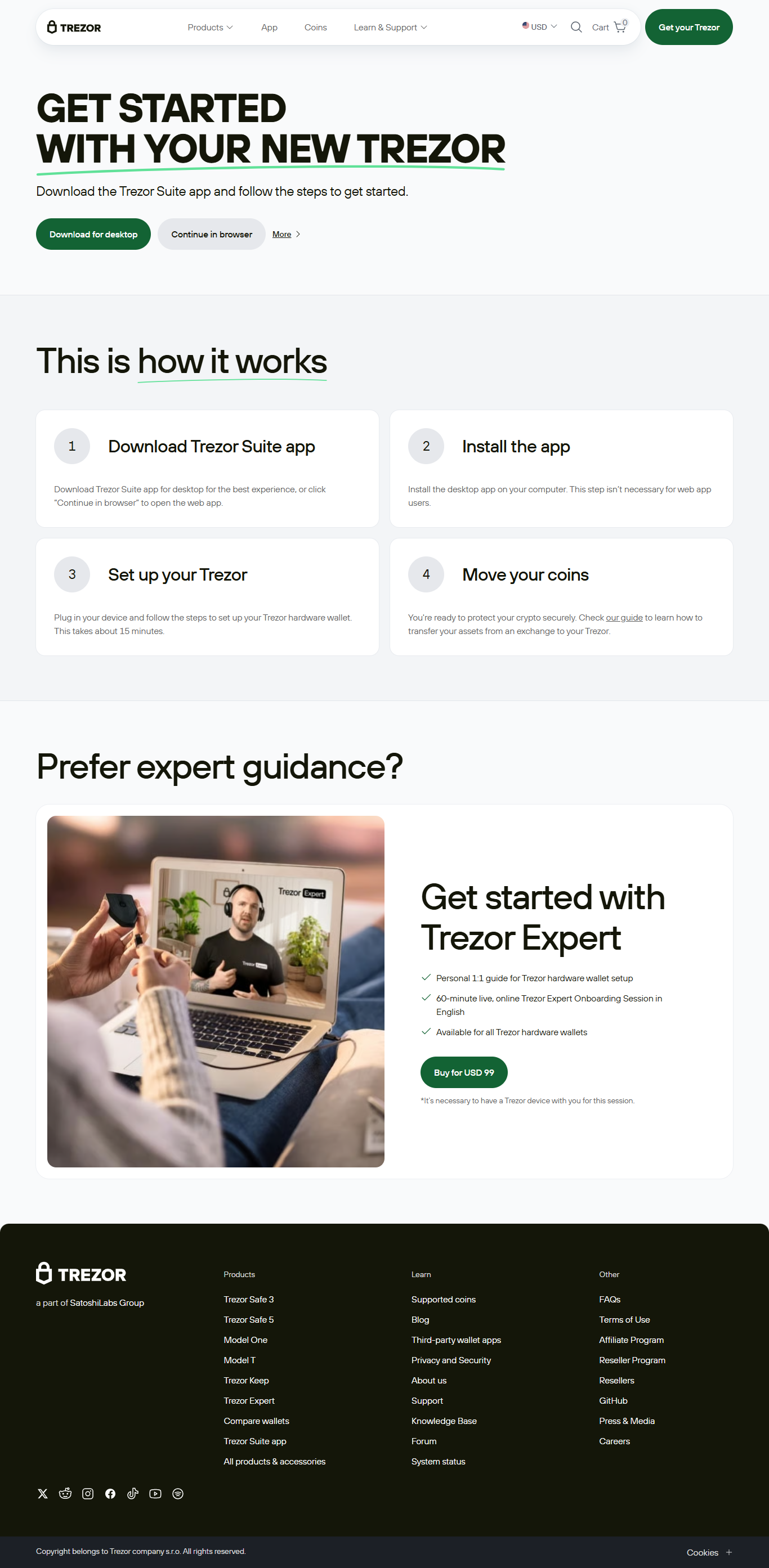
Trezor Suite – Secure Crypto Wallet Management
In the rapidly evolving world of digital assets, security and usability are no longer optional—they are essential. As cryptocurrencies gain mainstream adoption, users need reliable tools to manage, protect, and grow their holdings without sacrificing control. Trezor Suite is a comprehensive desktop and web-based application developed by SatoshiLabs that enables users to manage their crypto assets securely through Trezor hardware wallets. Designed with privacy, transparency, and user empowerment at its core, Trezor Suite represents a modern approach to secure crypto wallet management.
This article explores what Trezor Suite is, how it works, its key features, security architecture, supported assets, and why it stands out in the crowded crypto wallet ecosystem.
What Is Trezor Suite?
Trezor Suite is the official software interface for Trezor hardware wallets, including Trezor Model One and Trezor Model T. It replaces the older Trezor Wallet web interface and offers a more unified, privacy-focused, and feature-rich experience. Trezor Suite allows users to send, receive, store, and manage cryptocurrencies while keeping private keys securely offline on the hardware device.
Unlike custodial wallets or centralized exchanges, Trezor Suite is non-custodial. This means users retain full ownership and control of their private keys and funds at all times. The software simply acts as a secure bridge between the user and the blockchain, while all sensitive cryptographic operations are performed on the hardware wallet itself.
Trezor Suite is available as:
A desktop application (Windows, macOS, Linux)
A web-based interface (with some limitations compared to desktop)
Core Philosophy: Security and Self-Sovereignty
At the heart of Trezor Suite is a strong commitment to self-sovereignty. The platform is built on the principle that users should not have to trust third parties with their assets. This philosophy is reflected in several key design choices:
Open-source development: Both Trezor firmware and Trezor Suite code are publicly auditable, promoting transparency and community trust.
No data collection by default: Trezor Suite minimizes data sharing and allows users to route traffic through the Tor network for enhanced privacy.
Local control: Private keys never leave the hardware wallet, and transactions must be physically confirmed on the device.
Key Features of Trezor Suite
1. Intuitive User Interface
Trezor Suite offers a clean, modern, and beginner-friendly interface without compromising advanced functionality. The dashboard provides an overview of portfolio balances, asset allocation, and recent transactions, making it easy for users to monitor their holdings at a glance.
The interface is consistent across platforms and designed to reduce user error—an important consideration in crypto security.
2. Hardware-Level Security Integration
All sensitive actions, such as signing transactions or changing wallet settings, require confirmation directly on the Trezor device. This ensures protection against malware, phishing attacks, and keyloggers that may compromise a user’s computer.
Even if the connected computer is infected, attackers cannot access private keys or authorize transactions without physical access to the hardware wallet.
3. Privacy Enhancements
Trezor Suite places strong emphasis on user privacy, offering features such as:
Tor integration: Users can route blockchain and backend communication through Tor to hide their IP address.
Custom backend servers: Advanced users can connect to their own Bitcoin or Ethereum nodes, reducing reliance on third-party infrastructure.
No mandatory KYC: Trezor Suite does not require identity verification.
These features are especially valuable for users who prioritize anonymity and censorship resistance.
4. Built-in Exchange and Buy Options
Trezor Suite integrates third-party services that allow users to:
Buy cryptocurrencies with fiat
Exchange one crypto asset for another
While these services are optional and provided by external partners, the integration allows users to perform basic trading operations without moving funds to centralized exchanges. Importantly, users retain control of their keys throughout the process.
5. Advanced Wallet Management
Trezor Suite supports advanced features for experienced users, including:
Multiple accounts per asset
Hidden wallets protected by passphrases
Custom transaction fees
Replace-by-Fee (RBF) for Bitcoin
These tools offer flexibility for different use cases, from long-term holding to active transaction management.
Supported Cryptocurrencies
Trezor Suite supports a wide range of cryptocurrencies and tokens, including but not limited to:
Bitcoin (BTC)
Ethereum (ETH)
Litecoin (LTC)
Bitcoin Cash (BCH)
Cardano (ADA)
Polkadot (DOT)
ERC-20 tokens
Support varies slightly depending on whether users are using Trezor Model One or Model T. New assets and features are regularly added through firmware and software updates.
Security Architecture
Offline Key Storage
The cornerstone of Trezor Suite’s security is offline private key storage. Keys are generated and stored within the Trezor hardware wallet and never exposed to the internet-connected environment.
PIN and Passphrase Protection
Users secure their device with a PIN code, and optionally, an additional passphrase. Each passphrase creates a unique wallet, offering plausible deniability and an extra layer of protection.
Recovery Seed
During initial setup, users receive a recovery seed (typically 12 or 24 words). This seed is the ultimate backup and allows wallet recovery in case the device is lost or damaged. Trezor Suite strongly emphasizes proper offline storage of this seed.
Desktop App vs Web Version
While Trezor Suite is accessible via a web interface, the desktop application is recommended for maximum security and functionality. The desktop version offers:
Better protection against phishing
Full Tor integration
Faster performance
More frequent updates
Using the desktop app reduces reliance on browsers, which are a common attack vector in crypto-related exploits.
Regular Updates and Community Trust
Trezor Suite is actively maintained and frequently updated to address security vulnerabilities, improve performance, and add new features. Because the project is open-source, the wider security and crypto community can audit changes and contribute improvements.
This transparency has helped Trezor build long-standing trust within the crypto ecosystem.
Who Should Use Trezor Suite?
Trezor Suite is suitable for:
Beginners seeking a safe and guided entry into crypto self-custody
Long-term investors who prioritize cold storage security
Privacy-conscious users looking for Tor and node customization
Advanced users who want granular control over transactions and wallet structure
While it may not replace professional trading platforms for high-frequency traders, it excels as a secure asset management solution.
Conclusion
Trezor Suite represents a mature, security-first approach to cryptocurrency wallet management. By combining the proven protection of hardware wallets with a modern, privacy-respecting software interface, it empowers users to take full control of their digital assets.
In an industry where trust is often misplaced and risks are ever-present, Trezor Suite stands out by eliminating unnecessary intermediaries and putting security back where it belongs—in the hands of the user. For anyone serious about protecting their crypto holdings while maintaining ease of use, Trezor Suite is a compelling and reliable choice.